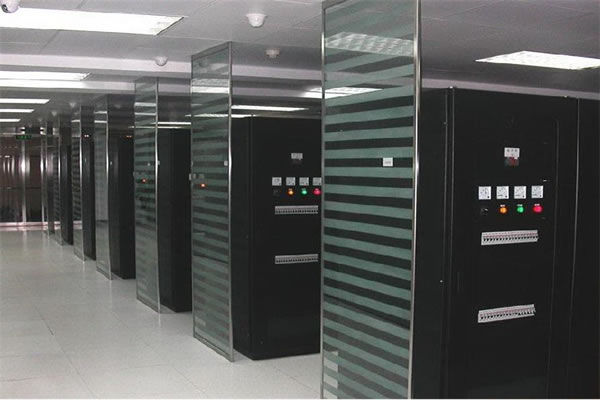
From a developer's perspective, looking at Malaysia's Google Cloud server network and security configuration, the core goal is to achieve low latency, high availability and controllable security boundaries. This article focuses on the network topology, connection methods, access control, and data protection strategies that need to be prioritized when deploying in Malaysia or nearby areas. It also proposes executable configuration recommendations based on actual development and operation and maintenance scenarios to facilitate the engineering team to build a robust cloud environment under localization and compliance requirements.
Deployment considerations and network topology in Malaysia
When deploying Google Cloud servers in Malaysia, priority is given to nearby regional nodes to reduce latency and meet data sovereignty requirements. The network topology should be based on regionalization to divide availability zones, divide production and test subnets, use private subnets to carry sensitive services and access external traffic through public network load balancing. From the developer's perspective, both elastic scaling and fault isolation should be taken into consideration, routing, NAT, and cross-region replication strategies should be planned in advance to keep network paths simple and observable.
VPC, subnet and routing best practices
The VPC design should use hierarchical subnets (management layer, application layer, data layer) and restrict access permissions between subnets, using fine-grained routing rules to prioritize communication with private IPs. Configure Cloud NAT or equivalent outbound mechanism for instances without fixed external IP addresses to avoid directly exposing the management port. From a developer's perspective, it is recommended to regularly review the routing table, avoid default route leaks, and configure reserved IPs and clear routing policies for critical services to facilitate quick fault location.
Connectivity options: VPN, Interconnect and hybrid architecture
Choose Site-to-Cloud VPN or dedicated interconnection based on business needs for reliable local-to-cloud connectivity. For scenarios with strict requirements on throughput and latency, partner interconnection or dedicated line services can be considered; while short-term or test environments can give priority to encrypted VPNs. Developers should clearly define routing priorities, bandwidth expectations, and failover strategies when designing hybrid architectures to ensure that cross-site communications do not produce data inconsistencies during switching.
Security Configuration: IAM, Firewall and Zero Trust Practice
Security policies should be based on the principle of least privilege, use organizational-level IAM policies to manage user and service account permissions, and combine conditional access controls to limit the scope of operations. Firewall rules should start by denying all inbound traffic, gradually allow necessary ports and record changes, and use tags or service accounts to make rules reusable and auditable. Promote the concept of zero trust to reduce the horizontal attack surface through mandatory multi-factor authentication, inter-service mTLS and fine-grained access policies.
Data Protection: Encryption, KMS and Compliance Essentials
Data should be encrypted in transit and at rest, preferably using platform-managed keys or customer-managed keys (KMS) to meet compliance and auditing needs. Developers should clarify which data requires customer-managed keys, key rotation strategies, and access audit paths, and reduce the risk of leakage through field-level encryption, desensitization of sensitive information, and other means. Systems with high regulatory or industry compliance requirements need to work with legal and security teams to formulate data retention and cross-border transfer strategies.
DDoS and edge protection (Cloud Armor and WAF ideas)
For high-traffic attacks and application-layer threats, edge protection and web application firewall rule sets should be enabled, and rate limits, IP black and white lists, and geolocation-based access control should be configured. From a developer's perspective, it is recommended to link global or regional protection strategies with load balancers, and set alarm thresholds and automated response scripts to ensure that affected instances can be quickly isolated when traffic anomalies occur while maintaining critical business availability.
Observability and Security Audit
A complete log and indicator solution is the basis for security operations, covering network flows, audit logs, system indicators and application logs. Developers should enable audit logs, centralized log collection, establish baseline alarms, and use log analysis to find abnormal access or permission abuse. Regularly perform vulnerability scanning, compliance inspections and penetration testing, and incorporate the findings into the development life cycle to ensure that security issues can be quickly repaired and traced back.
Summary and suggestions
In summary, from a developer's perspective, the network and security configuration of Google Cloud Server in Malaysia should focus on regional deployment, minimum permissions, encryption and observability. It is recommended to start by establishing standardized VPC templates and IAM policies, clarify hybrid connectivity requirements, and automate firewall and key management processes. At the same time, we promote cross-team drills and regular audits, and embed security design into the development life cycle to achieve compliant and sustainably scalable cloud services in the Malaysian environment.